Accessibility: Why It’s So Important: SXSW
This was my first SXSW event thanks to the good folks at Capital One. Moderated by C1’s, Mark Penicook, our panel, Larry Goldberg, Kevin Kalahiki, Sarah Goelitz and I discussed the…
This was my first SXSW event thanks to the good folks at Capital One. Moderated by C1’s, Mark Penicook, our panel, Larry Goldberg, Kevin Kalahiki, Sarah Goelitz and I discussed the…
The CSUN Assistive Technology conference is held each year in San diego. It is a week where accessibility professionals from around the world gather to share knowledge and ideas.
The next Inclusive Design 24 (#ID24) event will be held on 9 June 2017 (starting at 12 midnight GMT) – and our call for presentations is now open! Now in…
The 32nd CSUN Assistive Technology Conference will be in San Diego (February 27 to March 3). Here’s a round-up of the talks being given by the TPGi team and friends…
There’s a lot of help online about making Portable Document Format (PDF) accessible. Even with all the advice out there, I still encounter people who find it difficult to make…
“Necessity is the mother of invention” We have changed our Quality Assurance (QA) methods recently at TPGi and now require a screen reader friendly method to find spelling errors in…
FOSDEM is a free event for developers of free and open software, held in Brussels each year. With 30 tracks to choose from, it’s an intense two days of ideas,…
Accessibility Toronto has started a series this year where its members will be able to get (re)introduced to accessibility. Its first meet-up of the year offered two 20 minute talks,…
Updated 6/29/2023 Fifteen years ago, the U.S. Access Board received a final report from an advisory committee focused on refreshing the accessibility requirements for Information and Communication Technology (ICT). Commonly…
As accessibility consultants we regularly encounter ways that technology prevents people with disabilities from participating successfully, in employment, education, and in everyday life. We are delivering a new workshop on what we call “People First Design,” exploring practical ways to improve digital product and services by focusing UX efforts on people with disabilities.
My colleague Adrian Roselli and I recently joined the W3C Web of Things (WoT) Interest Group, so I thought I should provide a summary of what we mean when we talk about…
The TPGi partners Mike, Debs and Charlie have always placed an emphasis on developing and sharing knowledge on how to make the web more accessible for users. A major aspect…
Many of us at TPGi write and speak about things related to the web. This post collects together some of the articles, talks, books and meetups we’ve shared over the…
Internet Explorer and Edge have a vendor-prefixed -ms-high-contrast media feature which allows developers to detect if the user is currently in Windows High Contrast Mode, and to apply specific additional…
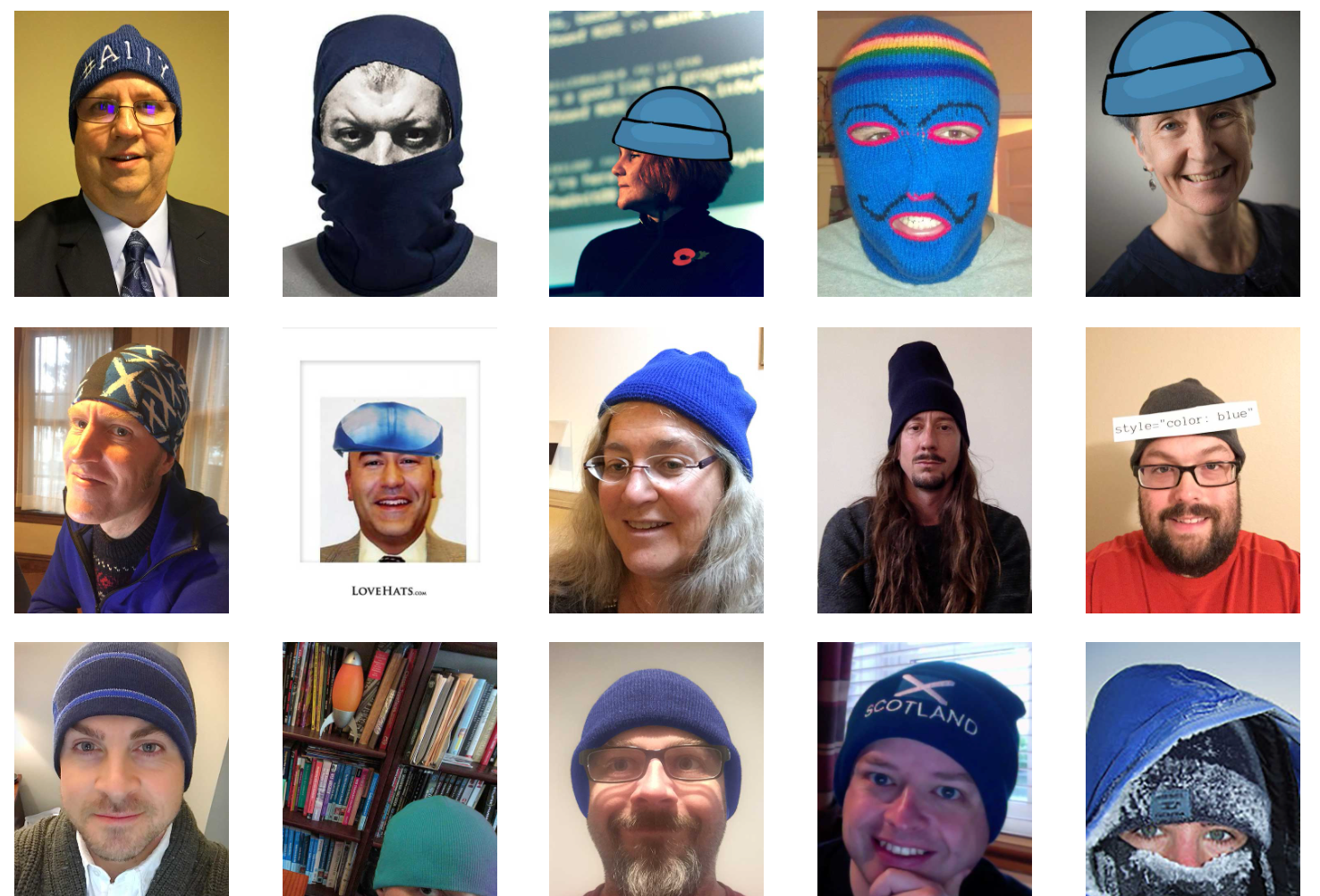
Today is Blue Beanie Day, and at TPGi we’ve put on our blue hats to show our commitment to web standards and a web for everyone. We believe web standards…
Probably a highlight of conference talks this year was giving the closing keynote at Northern UX in Manchester, UK. I spoke about ‘The velvet rope’ — being tantalizingly close to…
I was thrilled to present at this year’s Accessibility Camp Toronto (A11yTO). It’s a great city with a really engaged accessibility community. Reminded me of my accessibility days with ICADD, before…
Native HTML elements don’t require the addition of ARIA attributes to expose the semantics they have, as, for the most part, browsers expose this information: YAY. This is expressed in…