HTML5 Accessibility Chops: the figure and figcaption elements
The figure and figcaption elements are 2 of the new elements in HTML5. Together they provide the promise of being able to mark-up, with meaning, the structure and relationship between…

The figure and figcaption elements are 2 of the new elements in HTML5. Together they provide the promise of being able to mark-up, with meaning, the structure and relationship between…
The W3C HTML5 specification contains an SVG (Scalable Vector Graphics) based interactive Venn diagram. The diagram illustrates the relationship between HTML content categories. Currently the content and interactivity of the…
Bits & Bobs about web accessibility.
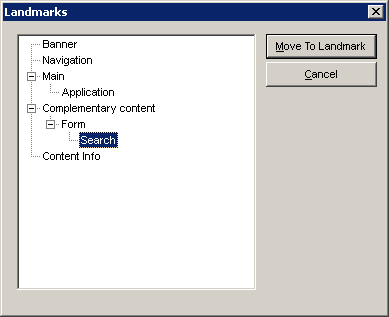
The ARIA landmark roles can be used in HTML5 to markup regions of a page. Landmark roles add a new means to navigate page content for users of supporting assistive…
There are 2 methods of labelling a form control using the HTML label element. You can wrap the control inside the label element or you can include the for attribute…
As part of our ongoing effort to provide our clients and associates with valuable accessibility information, TPGi wants to let you know of recent activity by the United States Department…
We have been working on bug fixes to the Web Accessibility Toolbar 2011, the update is now available for download, includes the latest version of aViewer.
Refer to: aViewer 2013
It is conforming in HTML5 for links to include block level elements such as headings and paragraphs, this was forbidden in previous versions of HTML. A recent article by @feather…
HTML is currently defined in multiple documents, each purporting to be THE definition of HTML/HTML5. The documents are developed, published and maintained by 2 separate organisations. The 2 organisations have…
I tweeted the other day, suggesting people switch to the HTML5 doctype as the use of ARIA is conforming in HTML5. As things stand, if ARIA roles, states and properties…
A recent decision by the W3C HTML working group has caused much discussion and some consternation within the accessibility community and wider web development community.
Many User interface widgets can be developed using HTML, CSS and JavaScript, in some cases developers build custom versions of native HTML controls because they cannot achieve the exact look…
As many of you know, at TPGi we are passionate advocates for the practice of manual testing of applications and websites to ensure accessibility. Using quality assurance and usability test…
HTML5 introduces new section elements. The new elements include header, footer, section, article, nav and aside. What is the accessibility potential of these new elements for users of assistive technology…

In mid 2010 Anthony Kolber and Ben Schwarz started a discussion about the usability of W3C specifications, this resulted in Ben and Anthony’s initial restyled version of the W3C HTML5…
The Microsoft MSAA API cannot provide mapping for all ARIA roles as it does not have defined roles and properties for all those defined by The ARIA specification, the Microsoft…

The placeholder attribute: The placeholder attribute can be used to place text inside an empty input type=”text” or textarea, the text is removed when the element receives focus.